.png)
Good factory supply good CHLOROSILANE 13465-78-6
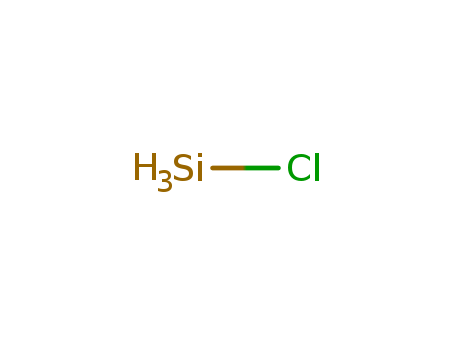
- Molecular Formula: ClH3Si
- Molecular Weight: 66.5623
- Vapor Pressure: 4920mmHg at 25°C
- Melting Point: -118 °C
- Boiling Point: -30,4°C
- Flash Point: -90°C (-133°F)
- PSA: 0.00000
- Density: 1,145 g/cm3
- LogP: -0.49440
CHLOROSILANE(Cas 13465-78-6) Usage
|
General Description |
Chlorosilanes are a class of liquids that range in color from clear colorless to light yellow colored. A clear to light yellow liquid. Slightly more dense than water. Contact may burn skin, eyes and mucous membranes. May be toxic by ingestion, inhalation, and skin absorption. Used to make other chemicals. |
|
Air & Water Reactions |
Highly flammable. Based on the properties of similar materials, there is the possibility that the reaction of CHLOROSILANE with water may be vigorous or violent. Products of the reaction include hydrogen chloride. The reaction generates heat and this heat may be sufficient to ignite the product. The chlorosilicon hydrides(ClxSiHy) are spontaneously flammable in air, NFPA 1991. |
|
Reactivity Profile |
Chlorosilanes are compounds in which silicon is bonded to from one to four chlorine atoms with other bonds to hydrogen and/or alkyl groups. Chlorosilanes react with water, moist air, or steam to produce heat and toxic, corrosive fumes of hydrogen chloride. They may also produce flammable gaseous H2. They can serve as chlorination agents. Chlorosilanes react vigorously with both organic and inorganic acids and with bases to generate toxic or flammable gases. |
|
Health Hazard |
Highly toxic: contact with water produces toxic gas, may be fatal if inhaled. Inhalation or contact with vapors, substance or decomposition products may cause severe injury or death. May produce corrosive solutions on contact with water. Fire will produce irritating, corrosive and/or toxic gases. Runoff from fire control may cause pollution. |
|
Fire Hazard |
Produce flammable and toxic gases on contact with water. May ignite on contact with water or moist air. Some react vigorously or explosively on contact with water. May be ignited by heat, sparks or flames. May re-ignite after fire is extinguished. Some are transported in highly flammable liquids. Containers may explode when heated. Runoff may create fire or explosion hazard. |
InChI:InChI=1/ClSi/c1-2
13465-78-6 Relevant articles
Surface Loss Coefficients for the Silyl Radical
Jasinski, Joseph M.
, p. 7385 - 7387 (1993)
Direct loss measurements for the heterog...
Resonance-Enhanced Multiphoton Ionization Spectra of the SiCl Radical between 430 and 520 nm
Johnson, Russell D.,Fang, Erti,Hudgens, Jeffrey W.
, p. 3880 - 3883 (1988)
The resonance-enhanced multiphoton ioniz...
Direct detection of chlorosilylene and time resolved study of some of its reactions in the gas-phase using a new photochemical precursor
Becerra,Boganov,Egorov,Krylova,Nefedov,Walsh
, p. 194 - 200 (2005)
Chlorosilylene, ClSiH, was prepared by 1...
Unusual isotope effect in the reaction of chlorosilylene with trimethylsilane-1-d. Absolute rate studies and quantum chemical and Rice-Ramsperger-Kassel-Marcus calculations provide strong evidence for the involvement of an intermediate complex
Becerra, Rosa,Boganov, Sergey E.,Egorov, Mikhail P.,Krylova, Irina V.,Promyslov, Vladimir M.,Walsh, Robin
, p. 10493 - 10501 (2012)
Time-resolved studies of chlorosilylene,...
Time-resolved gas-phase kinetic and quantum chemical studies of reactions of silylene with chlorine-containing species. 1. HCl
Becerra, Rosa,Cannady, J. Pat,Walsh, Robin
, p. 3987 - 3993 (2004)
Time-resolved kinetic studies of the rea...
SYNTHESIS OF ORGANO CHLOROSILANES FROM ORGANOSILANES
-
Page/Page column 36; 37, (2019/04/16)
The invention relates to a process for t...
Lewis Base Catalyzed Selective Chlorination of Monosilanes
Sturm, Alexander G.,Schweizer, Julia I.,Meyer, Lioba,Santowski, Tobias,Auner, Norbert,Holthausen, Max C.
supporting information, p. 17796 - 17801 (2018/11/23)
A preparatively facile, highly selective...
Amorphous silicon: New insights into an old material
Spomer, Natalie,Holl, Sven,Zherlitsyna, Larissa,Maysamy, Fariba,Frost, Andreas,Auner, Norbert
, p. 5600 - 5616 (2015/03/30)
Amorphous silicon is synthesized by trea...
13465-78-6 Process route
-
-
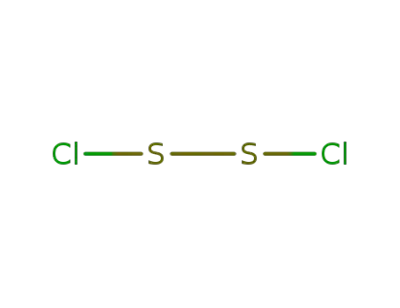
10025-67-9
disulfur dichloride

-

-
7440-21-3
silicon

-
-
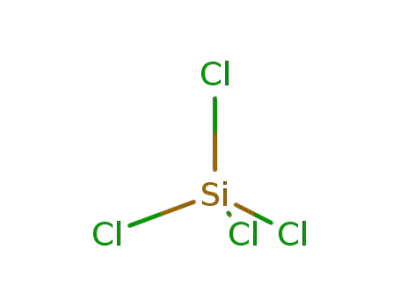
10026-04-7,53609-55-5
tetrachlorosilane
-
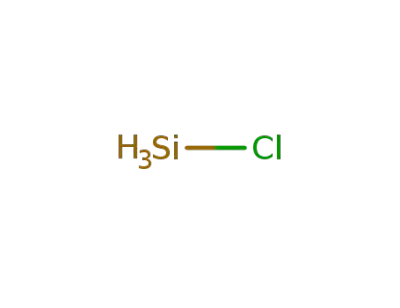
-
13966-57-9,13465-78-6
chlorosilane
-

-
7704-34-9
sulfur
| Conditions | Yield |
|---|---|
|
In
neat (no solvent);
heating at a temperature below red heat;;
|
|
|
In
neat (no solvent);
heating at a temperature below red heat;;
|
-

-
7789-78-8
calcium hydride
-
-
10026-04-7,53609-55-5
tetrachlorosilane
-
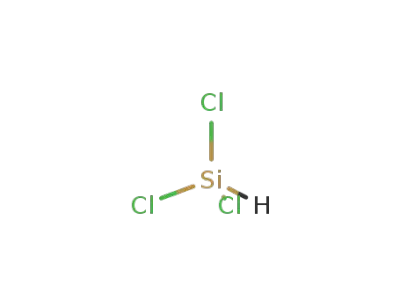
-
10025-78-2
trichlorosilane
-
-
13966-57-9,13465-78-6
chlorosilane
-
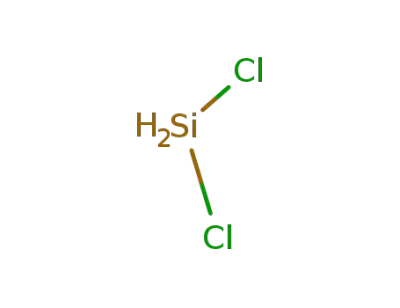
-
4109-96-0
Dichlorosilane
| Conditions | Yield |
|---|---|
|
In
neat (no solvent);
byproducts: H2, HCl; passing SiCl4 vapor over CaH2 below red heat;;
|
0%
0% |
|
In
neat (no solvent);
byproducts: H2, HCl; passing SiCl4 vapor over CaH2 below red heat;;
|
0%
0% |
13465-78-6 Upstream products
-
10025-78-2
trichlorosilane
-
82146-27-8
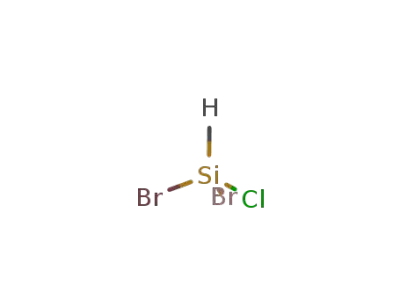
dibromochlorosilane
-
1631-73-8
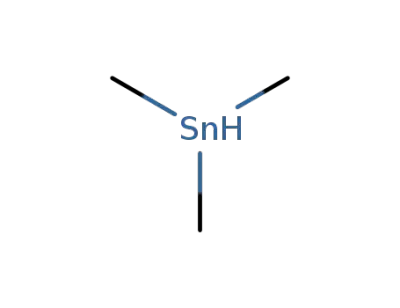
trimethylstannane
-
10025-67-9
disulfur dichloride
13465-78-6 Downstream products
-
107-46-0
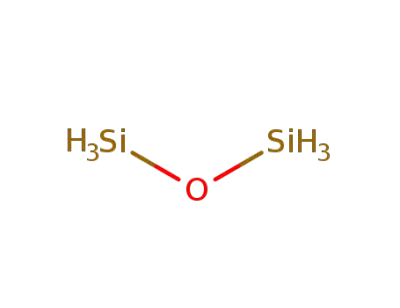
disiloxane
-
4459-06-7
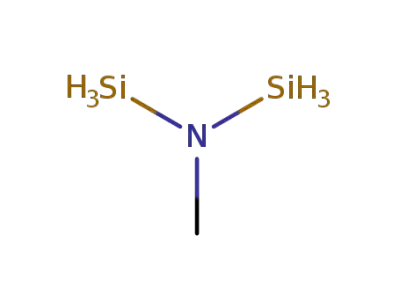
methyldisilylamine
-
20536-13-4
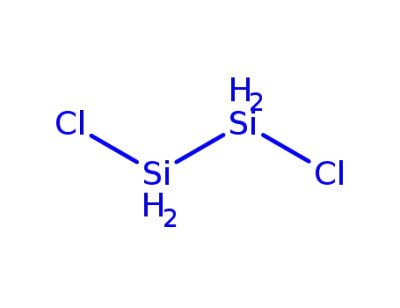
1,2-dichlorodisilane
-
1333-74-0
hydrogen